
Mobile App Development for RV Battery Systems
Short Overview
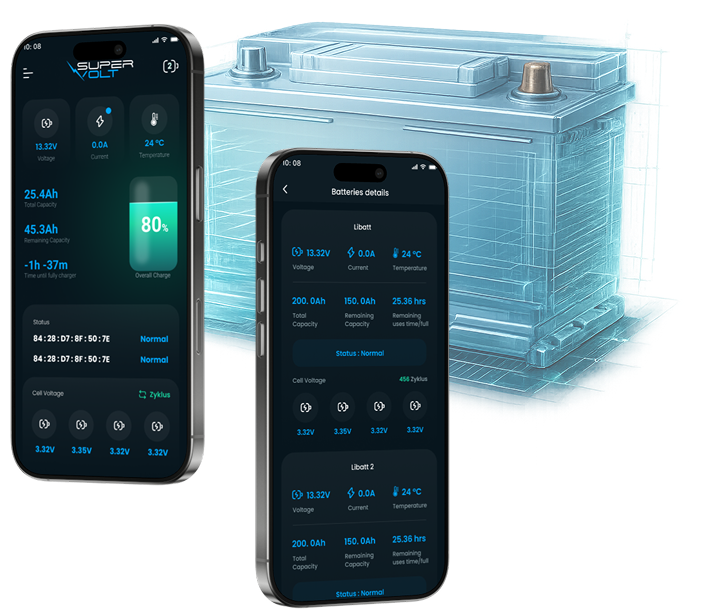
SuperVolt, a Germany-based company specializing in advanced energy solutions for motorhomes and RV systems, is expanding its product line with a connected solution that gives users real-time insight and remote control over battery performance. The new system allows RV owners to track key parameters, manage their energy setup remotely, and ensure safe, efficient operation — all through intuitive web and mobile applications.
Project Details
- Industry: Renewables/Solar and Wind, High-Tech, Smart Home, Smart City, Consumer IoT
- Services: R&D Services, UI/UX Design, Mobile App Development, Android App Development, iOS App Development, Software Testing Services, Tech Advisory, IoT App Development
- Lifetime: 2024 - ongoing
- Client's Location: Germany #00a9ff
Project background
SuperVolt's existing mobile app connected to the battery's BMS over BLE but ran on a legacy, tightly coupled codebase, and the UI no longer matched real RV usage. As the product line evolved and new hardware interfaces were planned, these limitations became evident. Therefore, SuperVolt turned to Indeema to improve and modernize the mobile app, laying a stronger foundation for what comes next.
What was the customer's request?
- SuperVolt asked Indeema to modernize its mobile bms app — the companion app that connects to the battery's BMS and shows key status (state of charge, voltage, temperature). The brief was to refresh the UI and add new features to enhance the ownership experience and provide added value to SuperVolt's LiFePO4 batteries sold in Germany.

What did the client already have?
- SuperVolt came with an existing mobile app that connected to the battery's BMS (via Bluetooth) and displayed core status such as state of charge, voltage, and temperature. The app's UI and user flows needed refinement to make the experience more user-friendly and consistent with real RV use.

Solution we delivered
Where did we start?
We began with a code review to confirm whether the new features could be built on the existing architecture, estimate effort, and suggest improvements. In parallel, R&D translated the scope of feature expansion and UI update into concrete user flows (e.g., firmware update), identified target users and usage contexts, and considered technical constraints to propose the most effective approach.
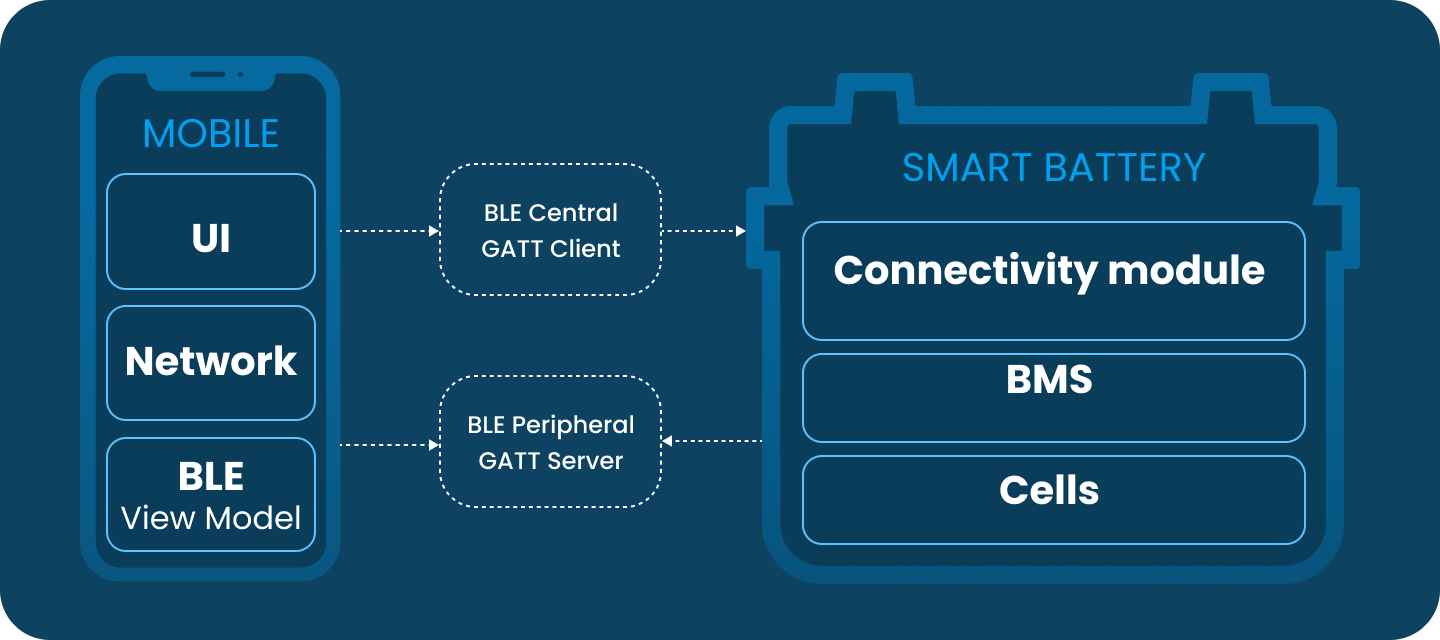
Our Development Process
UX/UI Design
The client provided an initial design, which we refined to make the app more user-friendly. We identified the primary user groups and considered their behavior and usage context — where and how they use the app — and reflected these insights in the updated UI.
Mobile Development
Following a focused code review of the existing app, we concluded that extending the legacy architecture would be impractical and more expensive than rebuilding. We therefore proceeded with a clean implementation from scratch to provide a stable, scalable base for upcoming features.
Maintenance
We continue iterating on the app with focused feature updates and UX refinements. As the third-party BMS firmware evolves, we add support for new battery capabilities and ensure the app remains stable, scalable, and aligned with the latest device functionality.
The Team Involved In The Project
Project Managers
1
IOS Engineer
1
Android Engineers
1
QA
1
UI/UX Designer
1
Project Challenges And Our Suggestions
Limited OEM Documentation (Firmware & Hardware)
The batteries were sourced from China, and the vendor documentation was incomplete. This created uncertainty around expected device behavior and interfaces. We addressed this by performing reverse engineering, arranging calls with the OEM, validating the firmware in practice, and reporting discrepancies to reconcile the docs with real behavior.
Legacy App Code Constraints
The app had to support newer iOS versions while still working with legacy batteries, with only minimal changes to the existing codebase. We used architectural patterns to encapsulate legacy logic into isolated modules, enabling targeted updates without a full rewrite.

Impact
By transforming the companion mobile app into a clear, user-friendly experience, we turned it into a true value-add for SuperVolt's battery line — helping the client increase sales. The rebuild established a clean, scalable foundation, enabling continuous feature releases and strengthening SuperVolt's positioning in the RV market.
Before And After Cooperation With Indeema
Before:
Old app
Initial app design requiring UX refinement
After:
Delivered a new, more user-friendly mobile app; ongoing maintenance and feature updates.
New app built from scratch
Stable, scalable foundation for new features
Updated, user-friendly UI
Technical Highlights
Technologies
SWIFT
Kotlin
Silicons
Provide info

Custom Indoor Air Monitoring IoT System - Indeema’s Case Study
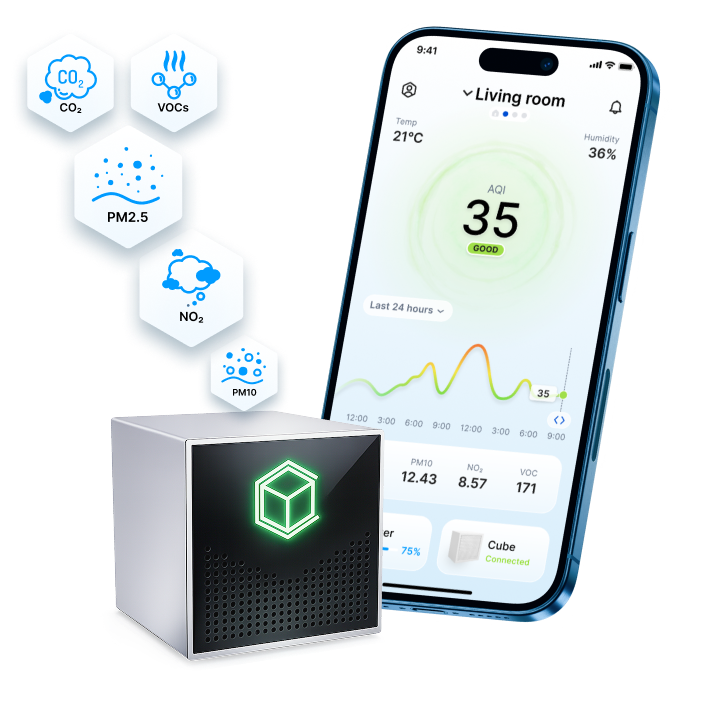
Cube Air is a smart air quality monitoring system designed to help residents stay aware of the air they breathe and know when it needs improvement. The solution combines a compact desktop device with a clear, user-friendly mobile app that visualizes indoor conditions in real time. Developed for a US company building premium apartments, Cube Air enhances the living experience by tracking indoor air quality.
- Industry: High-Tech, Smart Home, Smart Office, Smart City
- Service: R&D Services, MVP Development, UI/UX Design, Mobile App Development, IoT App Development, Cross-Platform App Development...
- Lifetime: 2024 - ongoing
- Client’s Location: USA
Mobile App Development for RV Battery Systems - Indeema’s Case Study
SuperVolt, a Germany-based company specializing in advanced energy solutions for motorhomes and RV systems, is expanding its product line with a connected solution that gives users real-time insight and remote control over battery performance. The new system allows RV owners to track key parameters, manage their energy setup remotely, and ensure safe, efficient operation — all through intuitive web and mobile applications.
- Industry: Renewables/Solar and Wind, High-Tech, Smart Home, Smart City, Consumer IoT
- Service: R&D Services, UI/UX Design, Mobile App Development, Android App Development, iOS App Development, Software Testing Services...
- Lifetime: 2024 - ongoing
- Client’s Location: Germany #00a9ff
IoT Video Intercom System Development - Indeema’s Case Study
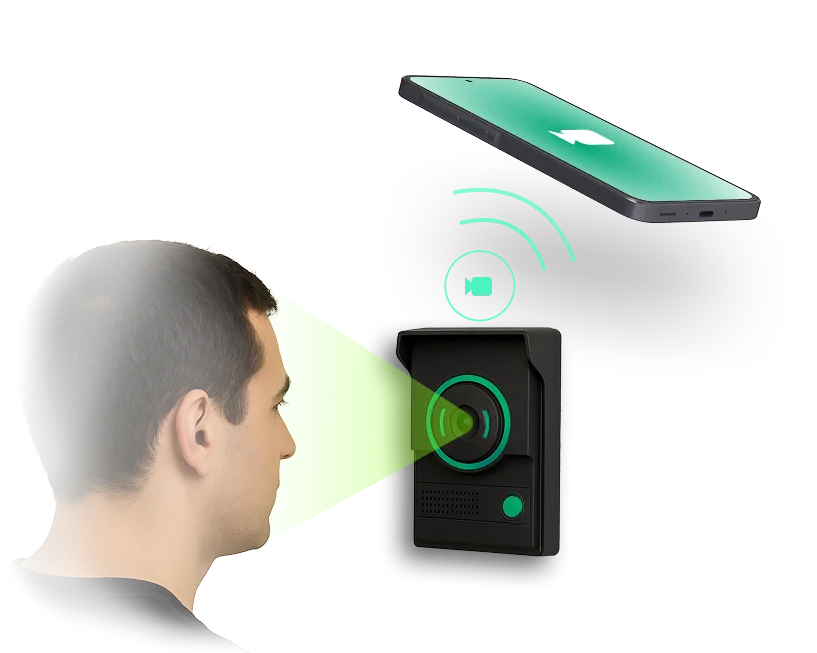
The partner from Germany (name not disclosed due to NDA), a company specializing in building communication systems, approached Indeema to develop a next-generation indoor intercom prototype. Their goal was to bridge analog video input from a door camera with smartphone connectivity, creating a more modern, user-friendly alternative to traditional in-building communication solutions.
- Industry: High-Tech, Smart Home
- Service: IoT Development, R&D Services, IoT Consulting Services, Firmware Development
- Lifetime: 2025
- Client’s Location: Germany
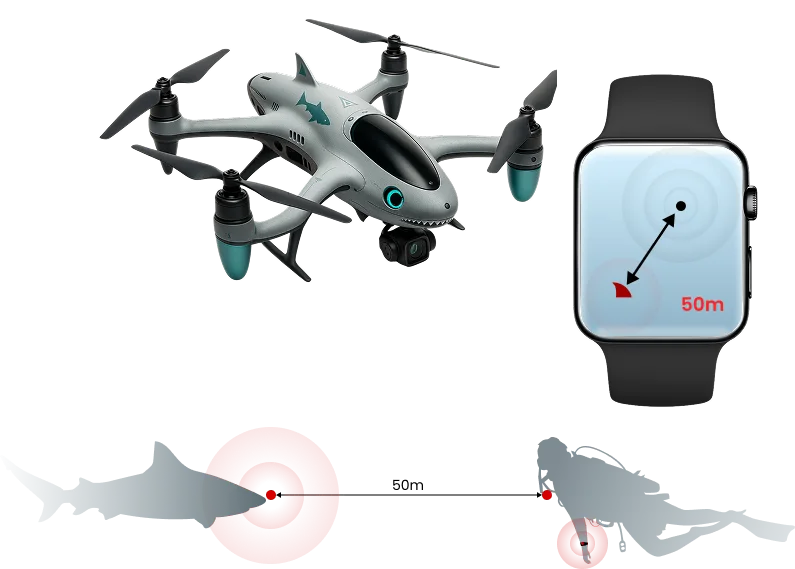
R&D for Drone Surveillance System
Hover Hero is an early-stage startup exploring connected drone technology to improve surfer safety. The concept focuses on real-time aerial threat detection and instant mobile or wearable alerts, bringing IoT-driven awareness to open water environments.
- Industry: High-Tech, Consumer IoT
- Service: R&D Services
- Lifetime: 2025
- Client’s Location: USA
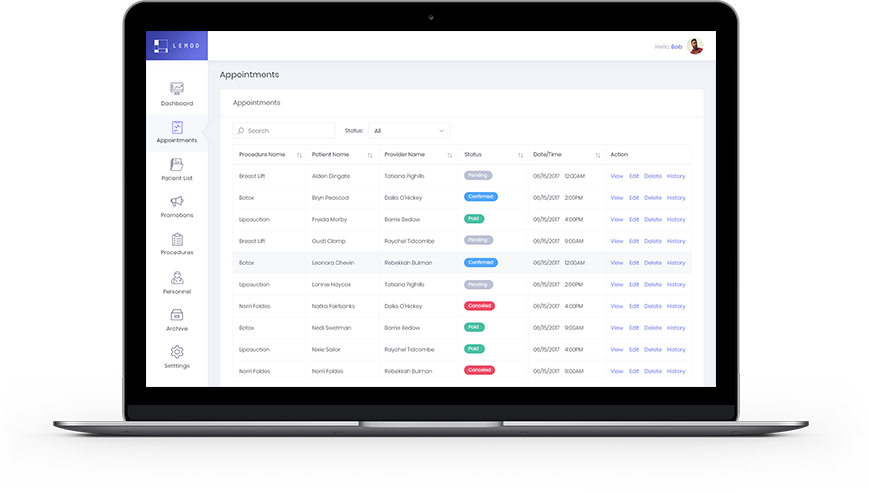
Web Platform for the Health and Wellness Industry
Web portal for configuring and managing aesthetic rewards programs for the US B2B market. Simplistic design that users love, set of promotion and rewards management features, HIPAA-compliant architecture, and lots of customization for exact practice needs. Platform connects practice providers with patients through exclusive offers, announcements, and promotion events, which improves patient-practice relations and increases patient lifetime value.
- Industry: Healthcare, Consumer IoT
- Service: Tech Advisory, Web Development, Back End Development, Front End Development, Database Development, UI/UX Design...
- Lifetime: 2018 - Maintenance
- Client’s Location: USA
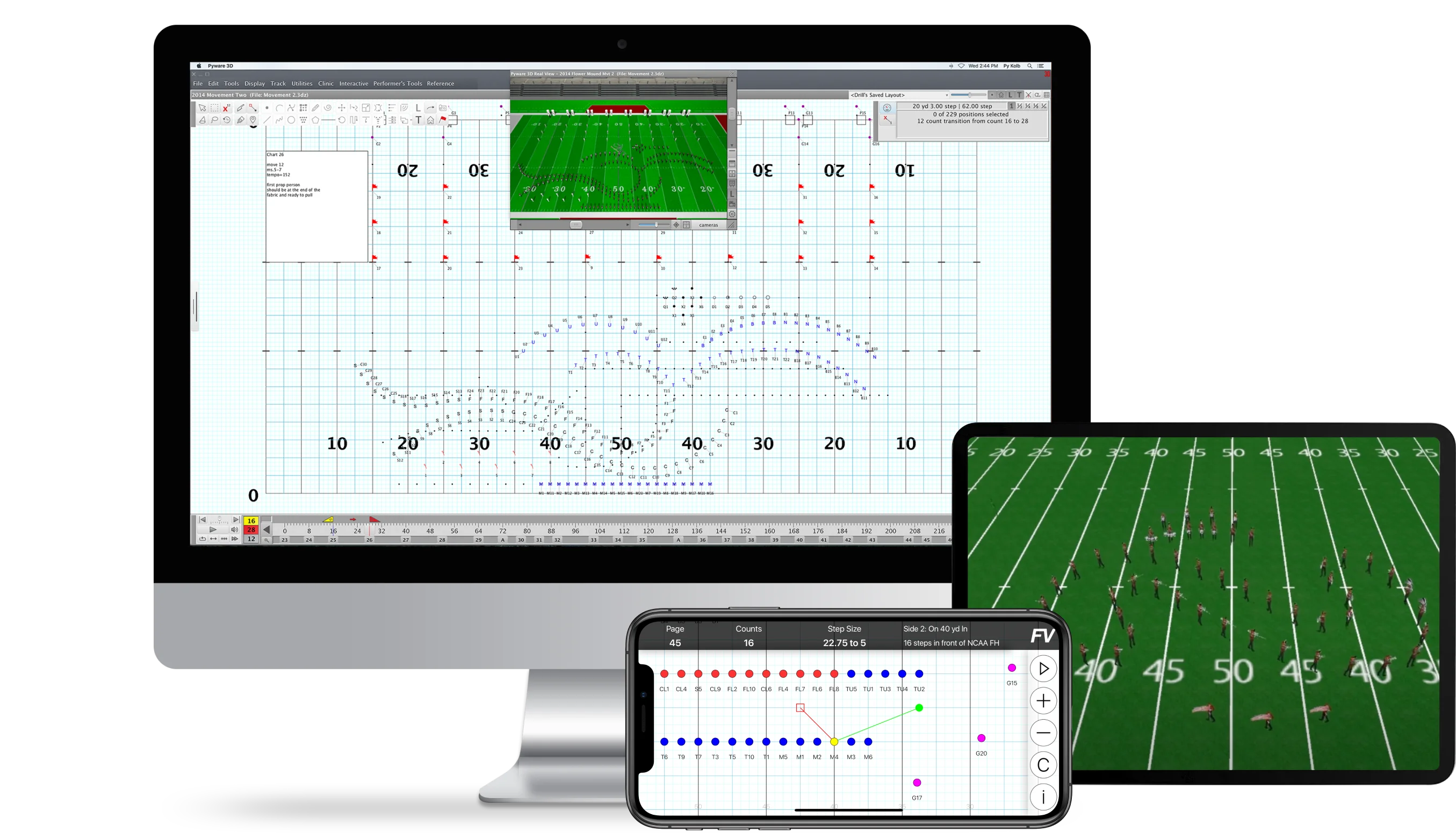
The Cross-Platform App for Marching Bands
Indeema delivered a solution that revolutionizes the coordination and mastering of marching drills. Unlike traditional methods that rely on physical drill books and manual coordination, the UDB app offers a digital solution that reshapes the entire process. With real-time information on coordinates and pathways, users can make informed decisions and adjustments on the fly, leading to enhanced performance and synchronization during rehearsals and performances.
- Industry: Education, Consumer IoT
- Service: R&D Services, MVP Development, UI/UX Design, Mobile App Development, iOS App Development, Android App Development...
- Lifetime: 2016 - Ongoing
- Client’s Location: USA